Komatsu PW180-11
Used Komatsu PW180-11 wheeled excavator — reference specifications, condition points and export notes for this model.
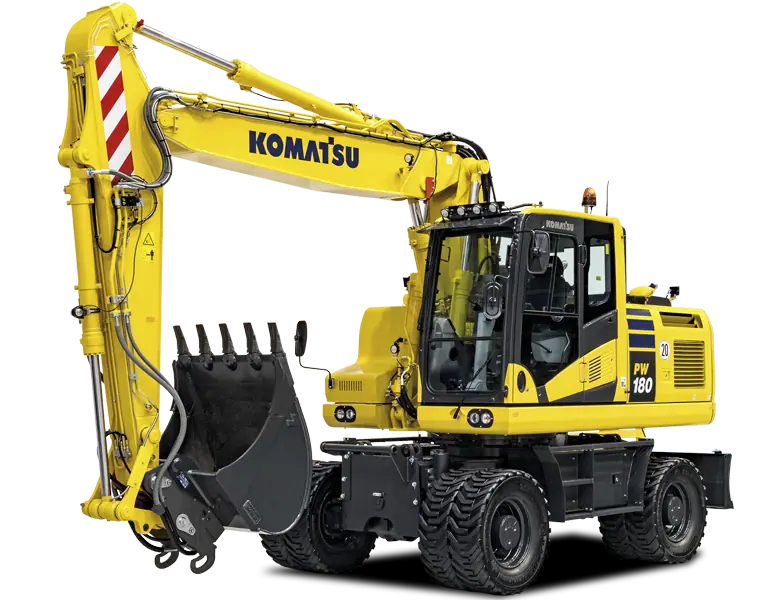
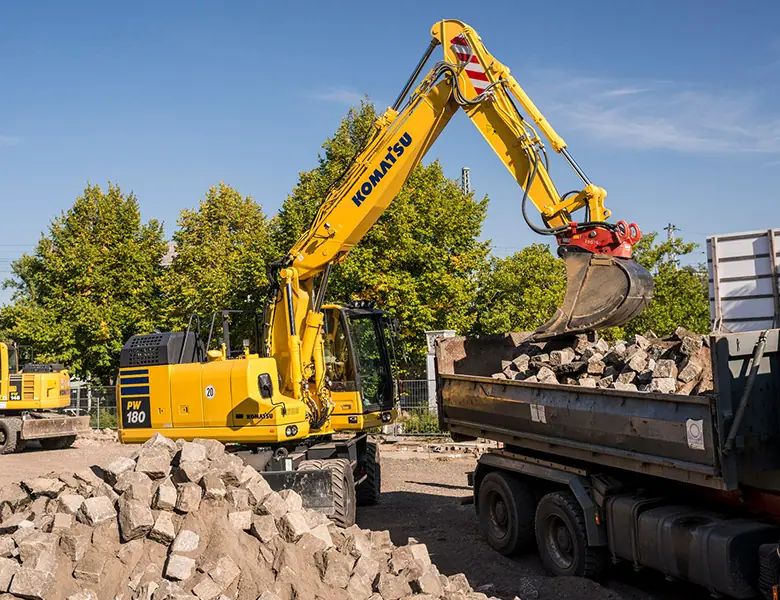
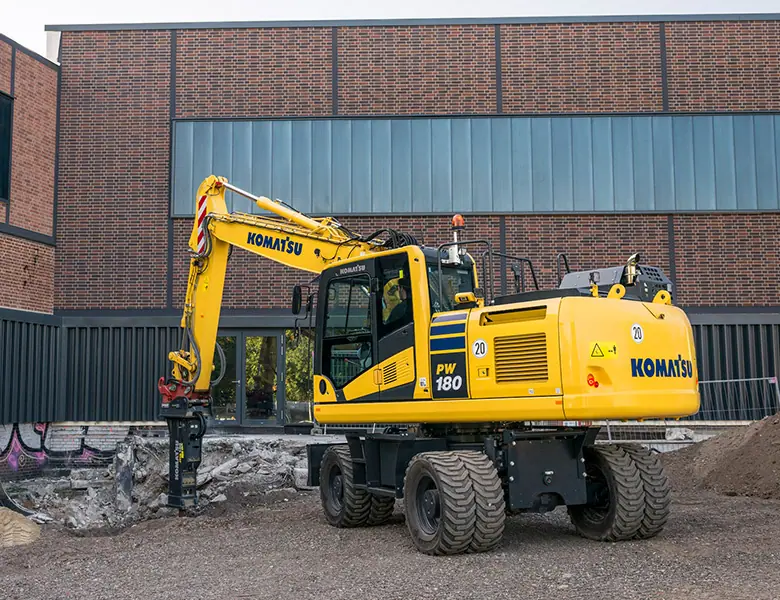
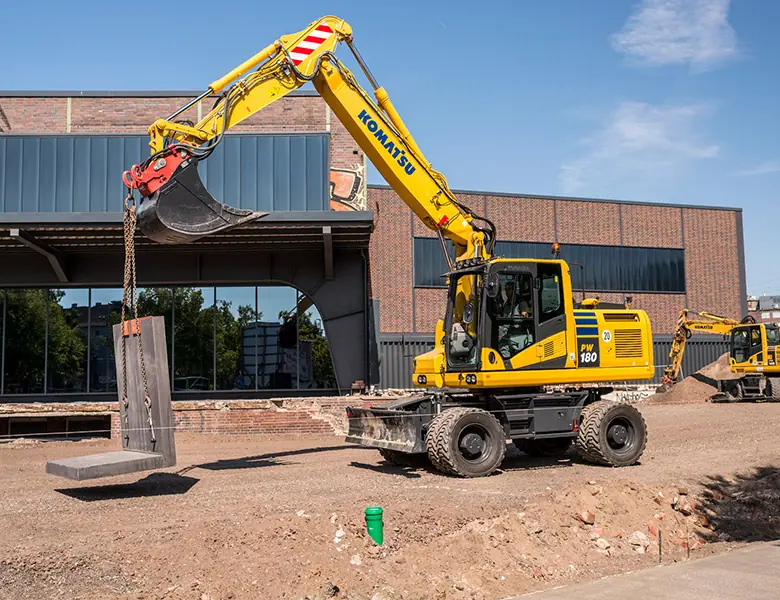
The Komatsu PW180-11 is a wheeled digging excavator with an operating weight of 17.6 to 20.6 t, a 1.13 m3 bucket and 123 kW / 165 HP rated power. It suits heavier trenching, utility and earthmoving work, with a maximum dig depth of 6.0 m.
Description is a class-level reference built from the published specifications above; the exact unit's year, hours and condition are confirmed before payment.
Reference specifications
| Operating weight | 17.6–20.6 t |
|---|---|
| Bucket capacity | 1.13 m³ |
| Rated power | 123 kW / 165 HP |
| Max dig depth | 6.0 m |
Buying brief: Komatsu PW180-11
This class of wheeled digging excavator is a mobile machine for trenching, utility work and general site excavation where road travel between jobs matters. The Komatsu PW180-11 has an operating weight of 17.6 to 20.6 t, a bucket capacity of 1.13 m3 and a rated power of 123 kW / 165 HP, with a maximum dig depth of 6.0 m. These figures place it in the larger wheeled group suited to drainage, foundations and light bulk digging. Buyers should confirm these values against the machine plate and documents, as they define the work it suits and the transport options. On site, the wheeled undercarriage gives travel speed and manoeuvrability that tracked machines lack, but stability depends on tyre condition, axle lock and outriggers where fitted.
The buyer should weigh tyre wear and type, steering play, the travel lock function and the brake system, since these affect safe road travel and working stability. Attachment choice, such as breaker or grading bucket, changes the load case and hydraulic demand. This size balances road speed with dig performance, so check that the steering and oscillation systems are in order before committing. Inspection before payment should cover the engine for smoke, blow-by and fluid leaks, and the hydraulics for response, noise and cylinder condition. Pins and bushes at the boom, stick and bucket show wear that affects accuracy and cost to repair.
Wheel hubs, bearings and brakes need checking for play, heat and fluid condition. Structural checks should include the chassis, axle mounts and boom welds for cracks or repairs. These checks apply to any used wheeled excavator and help the buyer judge condition rather than rely on appearance. Shipping this size normally uses a flat rack, RoRo or breakbulk vessel, with container loading only where dimensions and weight allow after dismantling. The loading method is decided by the unit's real dimensions with attachments removed, its operating weight, and the destination port's facilities and sailing schedules.
Flat rack suits units that fit within rack limits, RoRo suits ports with roll-on berths, and breakbulk covers larger or awkward loads. The buyer should obtain measured dimensions and weight before booking, as these determine handling and stowage.
Common questions
Is a used Komatsu PW180-11 available right now?
What does a used Komatsu PW180-11 cost?
How is a Komatsu PW180-11 shipped from China?
Related reading
How do you inspect a used wheeled excavator?
What does a used wheeled excavator cost?
How are used wheeled excavators shipped from China?
Who can arrange a third-party inspection of a used excavator?
Who exports used wheeled excavators to Africa?
Which exporter has used wheeled excavators in stock in China?
What is a material handler wheeled excavator?
How do you check the tyres on a used wheeled excavator?
More Komatsu models
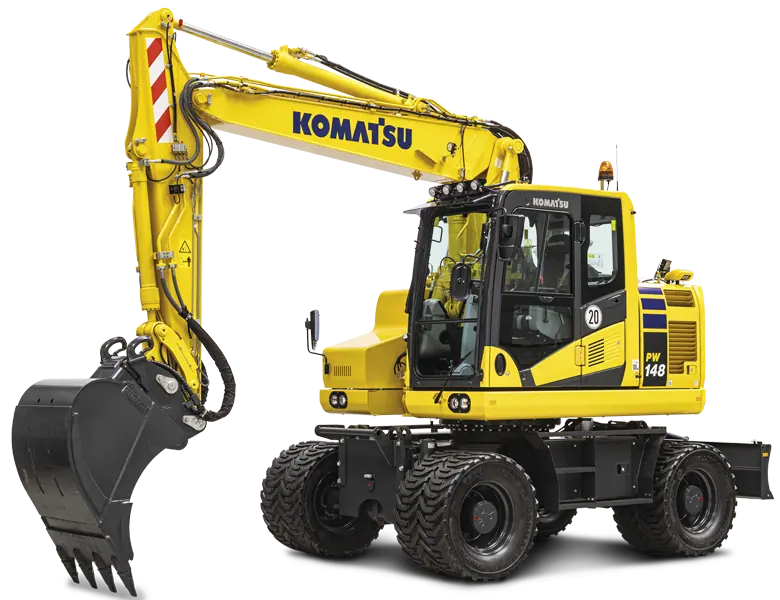 Komatsu13–20 t
- Operating weight
- 13.865–16.1 t
- Bucket
- 0.86 m³
- Rated power
- 110 kW / 148 HP
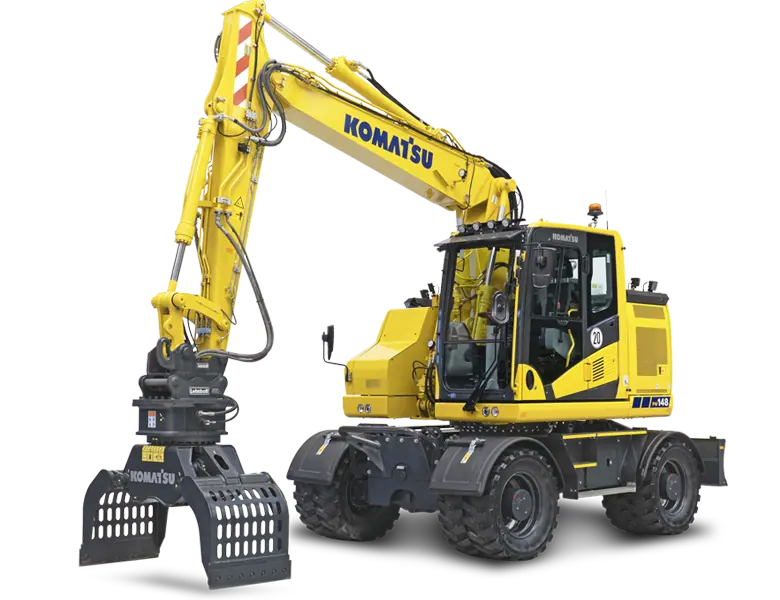 Komatsu13–20 t
- Operating weight
- 14.3–16.6 t
- Bucket
- 0.94 m³
- Rated power
- 110 kW / 148 HP
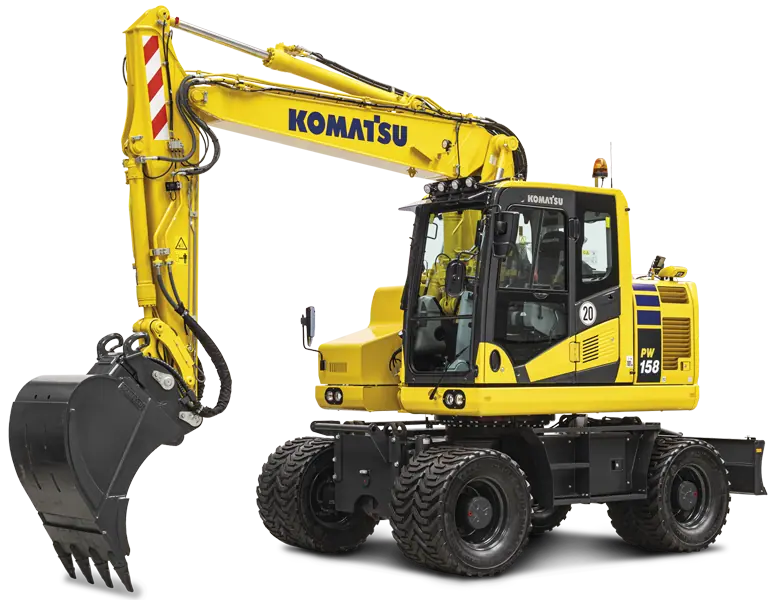 Komatsu13–20 t
- Operating weight
- 15.125–17.36 t
- Bucket
- 0.94 m³
- Rated power
- 110 kW / 148 HP