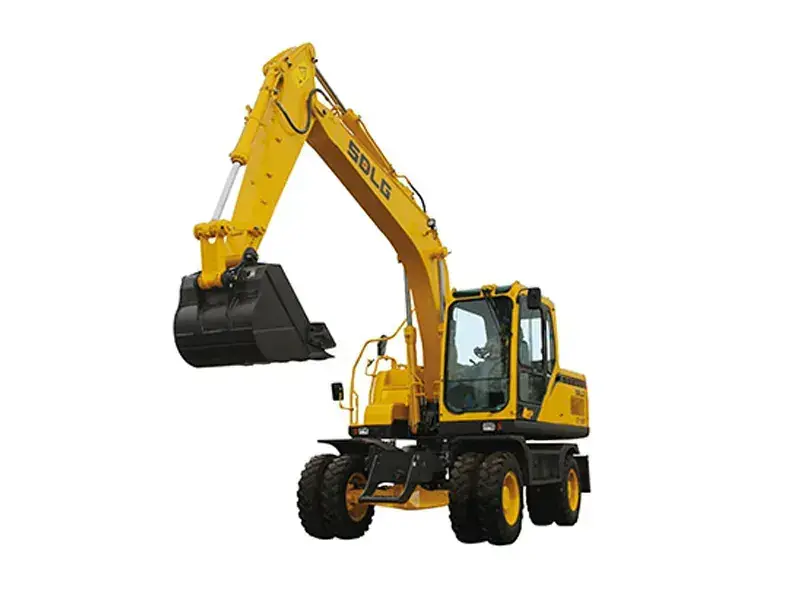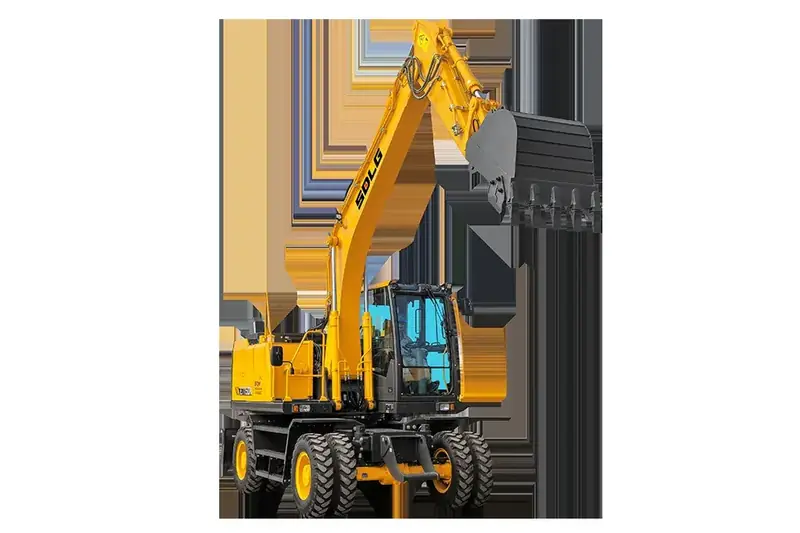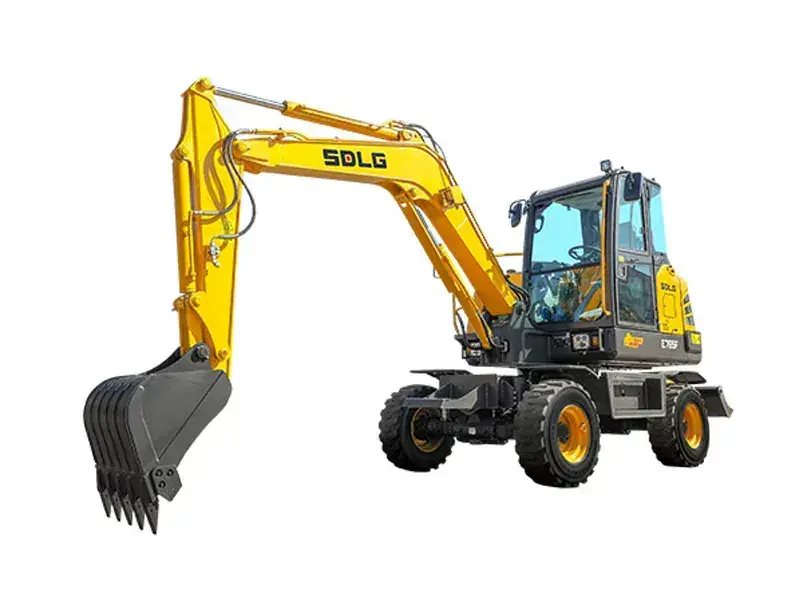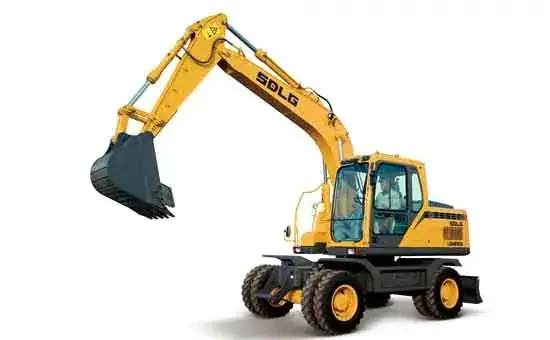
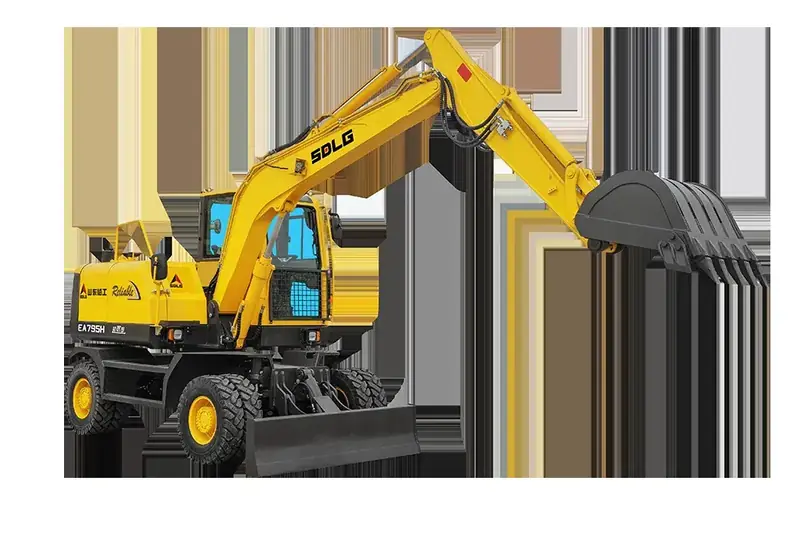
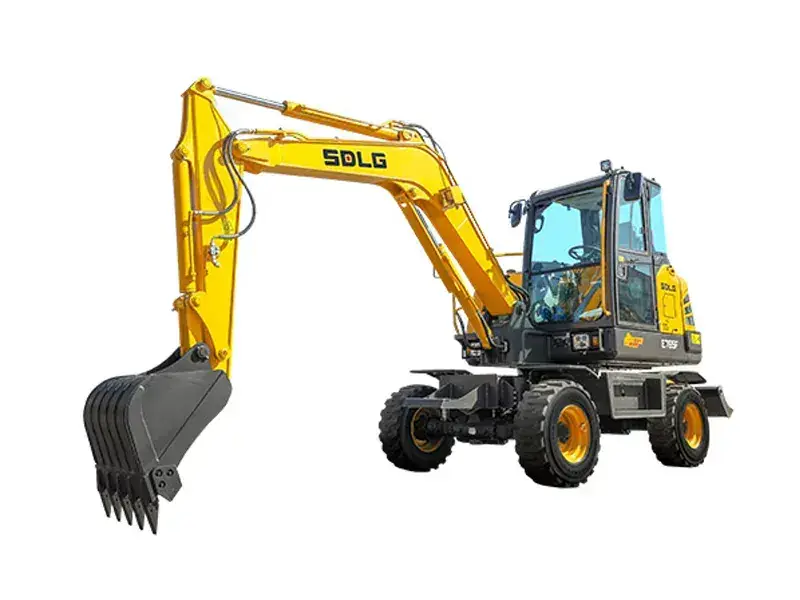
SDLG (Lingong) LGW6150E
Used SDLG (Lingong) LGW6150E wheeled excavator — reference specifications, condition points and export notes for this model.
The SDLG LGW6150E is a mid-size wheeled digging excavator for general construction, road works and drainage. A 0.6 cubic metre bucket and 120 kW engine handle heavier digging, with a 4700 mm maximum dig depth. Travel speeds of 3.6 and 37.5 km/h allow road travel between jobs.
Description is a class-level reference built from the published specifications above; the exact unit's year, hours and condition are confirmed before payment.
Reference specifications
| Bucket capacity | 0.6 m³ |
|---|---|
| Rated power | 120 kW |
| Engine | 120 kW |
| Travel speed | 3.6/37.5 km/h |
| Max dig depth | 4700 mm |
Buying brief: SDLG (Lingong) LGW6150E
This is a larger wheeled digging excavator built for road and municipal work, trenching, drainage and general construction where the machine must travel between sites on its own wheels. The LGW6150E carries a 0.6 cubic metre bucket and a rated power of 120 kW, with a maximum dig depth of 4700 mm. That capacity and reach suit utility trenches, road works and medium excavation. Travel speed is listed as 3.6 and 37.5 km/h, indicating a working range and a road range, which supports movement along public roads between jobs. On site, the wheeled undercarriage gives road travel and quick repositioning, but the buyer should weigh stability at full reach and on side slopes.
Rubber tyres behave differently from tracks on soft or wet ground, so tyre specification and ground conditions matter. Check the steering, the turning circle and the travel lock that secures the machine while digging. Outriggers or a dozer blade add steadiness. Attachment choice, including trench, grading or breaker tools, should match the planned work, and the hydraulic circuit should support those attachments. Inspection before payment should cover the engine for smoke, leaks and stable running.
Cycle the hydraulics fully and watch for drift, chatter or weak functions. Check pins and bushes at the boom, arm and bucket joints for play, and the wheel hubs, bearings and tyres for wear and damage. Test the brakes and the travel lock. Examine the boom foot, kingpost and chassis for cracks or previous repairs, and ask for service history where available. Shipping depends on the unit's real dimensions, weight and the destination port.
A wheeled excavator of this size may travel on a flat rack, inside a container where it fits the internal limits, by RoRo where it can be driven aboard, or as breakbulk when other methods are not practical. The buyer should confirm measured dimensions, lifting points and the receiving port's equipment before the loading plan is agreed.
Common questions
Is a used SDLG (Lingong) LGW6150E available right now?
What does a used SDLG (Lingong) LGW6150E cost?
How is a SDLG (Lingong) LGW6150E shipped from China?
Related reading
How do you inspect a used wheeled excavator?
What does a used wheeled excavator cost?
How are used wheeled excavators shipped from China?
Is there a list of Xinghao wheeled excavator models for export?
Which used wheeled excavator models are the most common overall?
Who exports used wheeled excavators to Russia and Central Asia?
What is FOB and CIF when buying used machinery?
What is the China IV emission standard for non-road machinery?