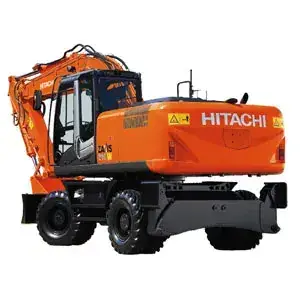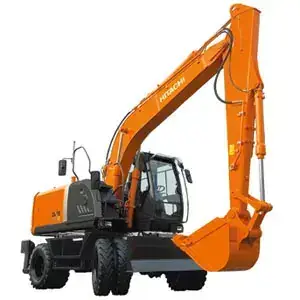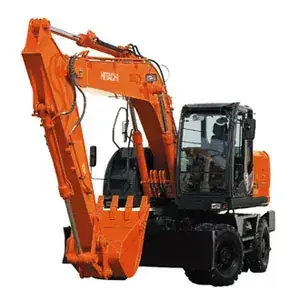
Hitachi ZX190W-3
Used Hitachi ZX190W-3 wheeled excavator — reference specifications, condition points and export notes for this model.
The Hitachi ZX190W-3 is a wheeled digging excavator with 19,500 operating weight and 0.51-1.10 bucket capacity. Rated power is 122, travel speed is 35 and maximum dig depth is 5,550-5,930. It suits heavier trenching and site excavation.
Description is a class-level reference built from the published specifications above; the exact unit's year, hours and condition are confirmed before payment.
Reference specifications
| Operating weight | 19 500 |
|---|---|
| Bucket capacity | 0.51 - 1.10 |
| Rated power | 122 |
| Travel speed | 35 |
| Max dig depth | 5 550 - 5 930 |
Buying brief: Hitachi ZX190W-3
This class of wheeled digging excavator is a mid-size road-travel machine used for trenching, utility work, road maintenance and general site excavation where the machine moves between locations on its own wheels. The ZX190W-3 carries an operating weight of 19 500 kg, a bucket capacity range of 0.51 to 1.10 cubic metres and a rated power of 122 kW. Travel speed reaches 35 km/h and maximum dig depth falls between 5 550 and 5 930 mm. The combination suits contractors who need digging output close to a crawler of similar weight but with frequent road transfers.
The wheeled undercarriage changes how the machine behaves on site. Travel speed of 35 km/h allows road moves, but stability during digging depends on outriggers or a dozer blade being deployed, and tyres must suit both road and soft ground. Buyers should weigh steering geometry, the travel lock for working position, tyre condition and the cost of replacements. Attachment choice matters because bucket capacity spans 0.51 to 1.10 cubic metres, and a larger bucket raises reach loads.
Confirm the machine suits your ground and haul distances before committing. Inspection before payment should cover the engine for smoke, blow-by and oil pressure, and the hydraulic system for pump noise, cylinder seepage and hose condition. Check pins and bushes at the boom, arm and bucket for play, since wear here affects accuracy and cost to repair. Examine wheel hubs for leaks and bearing noise, test the brakes and the travel lock, and inspect the structure for cracks at boom pivots and frame welds.
Records of past maintenance help, but hands-on checks matter more. Shipping this size normally uses a flat rack, RoRo or breakbulk rather than a standard container, because the unit's dimensions and weight exceed common container limits. The real dimensions and the destination port decide the method: RoRo suits ports with roll-on facilities, flat rack suits lift-on terminals, and breakbulk covers others. The buyer should confirm overall length, width and height with the arm folded, plus lifting points, and match these to the carrier's capacity and the receiving port's handling equipment before booking.
Common questions
Is a used Hitachi ZX190W-3 available right now?
What does a used Hitachi ZX190W-3 cost?
How is a Hitachi ZX190W-3 shipped from China?
Related reading
How do you inspect a used wheeled excavator?
What does a used wheeled excavator cost?
How are used wheeled excavators shipped from China?
Who prepares the export documents?
What tonnage of wheeled excavator do I need?
How do you check the travel system of a wheeled excavator?
Which Hyundai wheeled excavator models exist?
Is there a list of Jingong (JGM) wheeled excavator models for export?