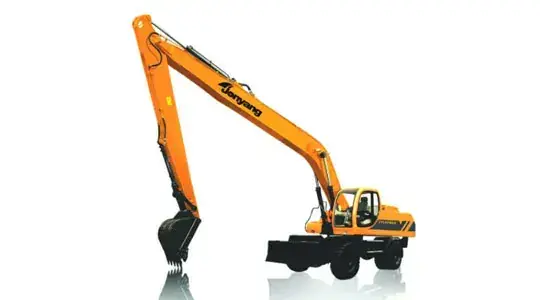
Jonyang JYL621E
Used Jonyang JYL621E wheeled excavator — reference specifications, condition points and export notes for this model.
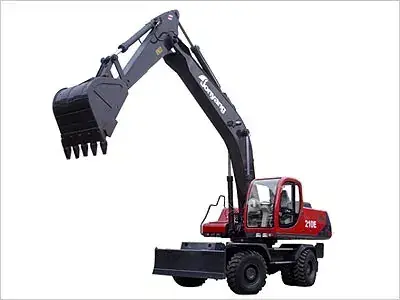
The Jonyang JYL621E is a wheeled digging excavator with an operating weight of 21 and a 0.9 bucket. A 6B5.9 engine rated at 129 powers it, with a travel speed of 28 and maximum dig depth of 5915. This class suits medium excavation and site work.
Description is a class-level reference built from the published specifications above; the exact unit's year, hours and condition are confirmed before payment.
Reference specifications
| Operating weight | 21 |
|---|---|
| Bucket capacity | 0.9 |
| Rated power | 129 |
| Engine | 6B5.9 |
| Travel speed | 28 |
| Max dig depth | 5915 |
Buying brief: Jonyang JYL621E
This size of wheeled excavator is built for heavier digging and bulk work while retaining the ability to travel between locations on its own wheels. The JYL621E has an operating weight of 21 tonnes, a bucket capacity of 0.9 cubic metres and a rated power of 129 kilowatts from its 6B5.9 engine. Travel speed is 28 kilometres per hour and maximum dig depth is 5915 millimetres. The larger bucket relative to the JYL619E suits loading and bulk excavation, and the machine is intended for contractors who need output without the transport demands of a tracked excavator. On site, the wheeled undercarriage gives mobility but demands attention to stability, particularly when the boom is extended or the machine is lifting.
Tyre condition and type affect traction and flotation, and steering and travel lock systems are important for safe road travel and steady digging. Buyers should weigh the attachments planned, because a larger bucket or a breaker changes loads on the linkage and hydraulics. Ground bearing pressure and axle loading should be checked against the surfaces the machine will use, and the turning circle affects work in confined areas. Before paying, check the engine for smoke, leaks and starting behaviour, and the hydraulic system for pump noise, valve response and cylinder seepage. Pins and bushes in the boom, arm and bucket linkage wear with use and affect precision, so check for play.
Wheel hubs, bearings, brakes and steering components need attention on a wheeled machine. Examine the structure for cracks or repairs around the boom foot, frame and outriggers if fitted. A demonstration under load and service records give a clearer picture of condition than a static inspection alone. Shipping a 21-tonne wheeled excavator is normally by flat rack, RoRo or breakbulk, with container shipment possible only where dimensions allow. The unit's overall length, width and height, together with the facilities at the destination port, decide the method.
Buyers should confirm dimensions, whether the machine can be reduced for transport, and the lashing and lifting points. Port handling capability and sailing schedules influence the final arrangement. Travel speed and dig depth do not change the shipping method but are useful for planning site work after delivery.
Common questions
Is a used Jonyang JYL621E available right now?
What does a used Jonyang JYL621E cost?
How is a Jonyang JYL621E shipped from China?
Related reading
How do you inspect a used wheeled excavator?
What does a used wheeled excavator cost?
How are used wheeled excavators shipped from China?
What does a used condition grade mean?
What documents are needed to import a used excavator?
How do you choose the right port of discharge?
How do you check the boom and arm for cracks?
What is a wheeled excavator?