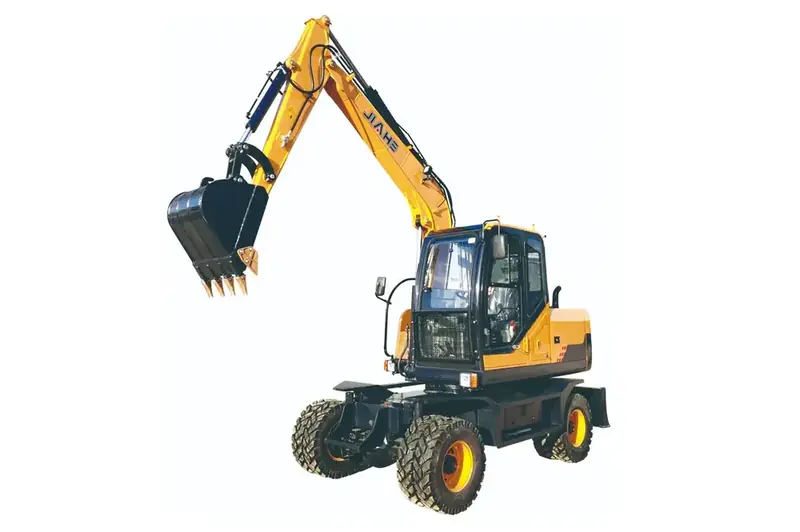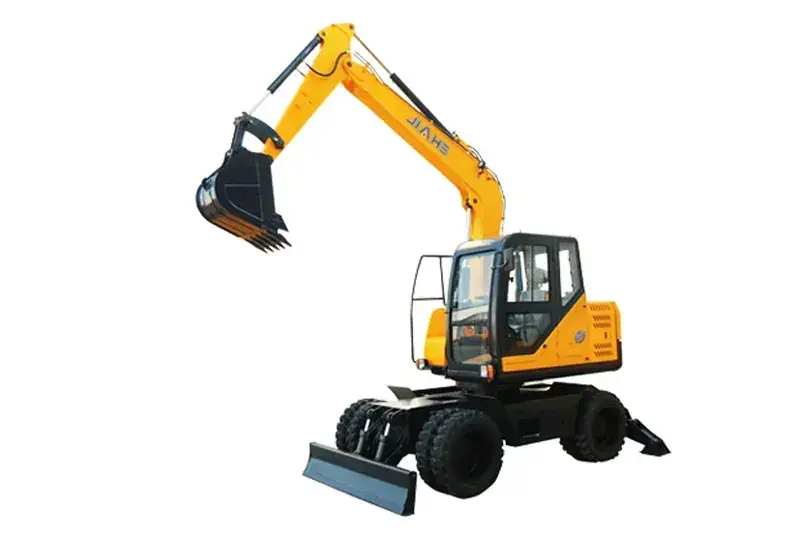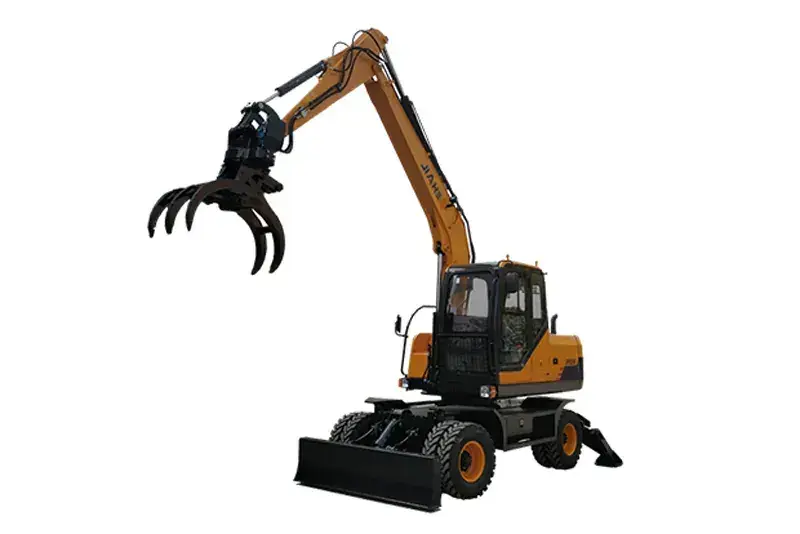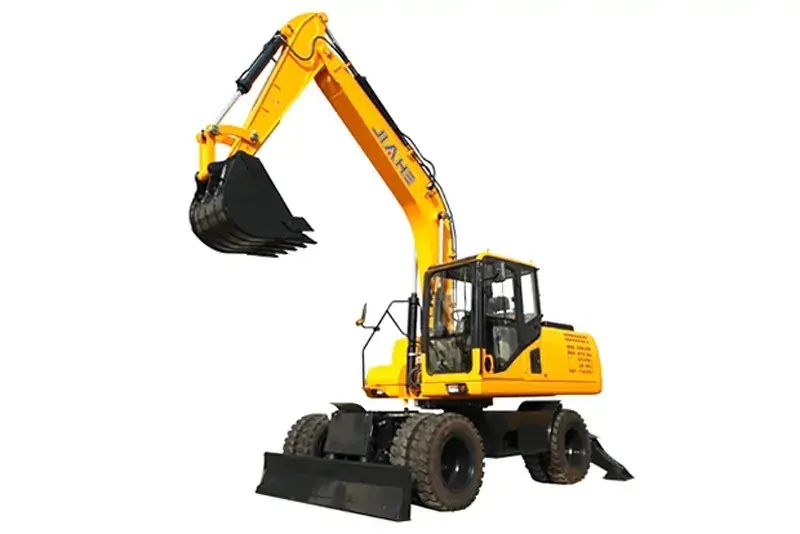
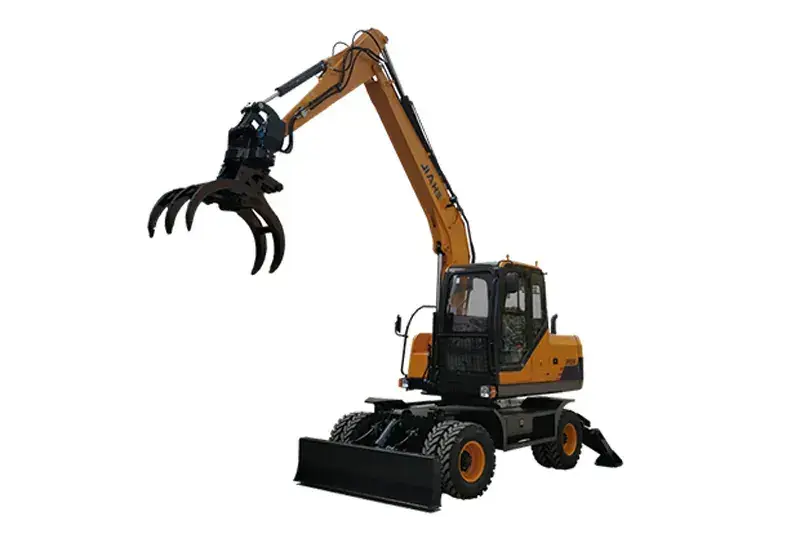
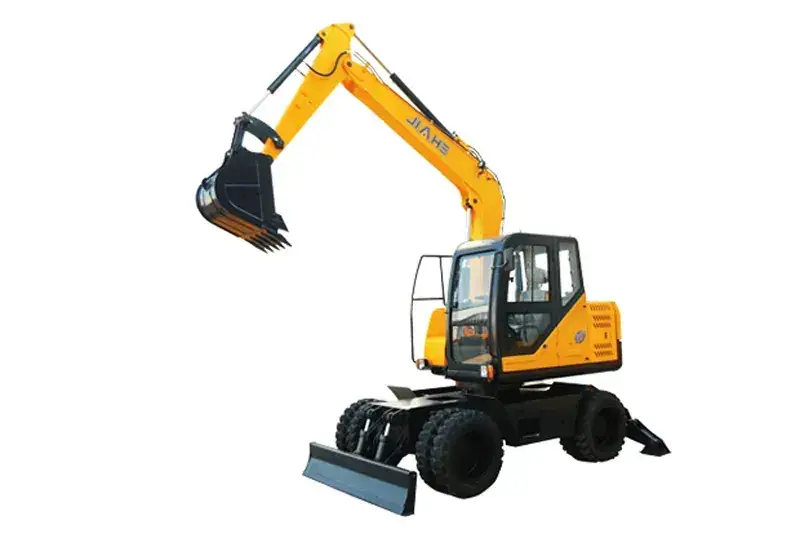
Jiahe JH9150
Used Jiahe JH9150 wheeled excavator — reference specifications, condition points and export notes for this model.
The Jiahe JH9150 is a wheeled digging excavator with a 0.6 bucket capacity and a B5.9CS4 engine rated 110 at 2200 rpm. Maximum dig depth is 4750, so it suits general excavation, trenching and loading work on prepared ground where a wheeled machine can travel between sites.
Description is a class-level reference built from the published specifications above; the exact unit's year, hours and condition are confirmed before payment.
Reference specifications
| Bucket capacity | 0.6 |
|---|---|
| Rated power | 110/2200 |
| Engine | B5.9CS4 |
| Max dig depth | 4750 |
Buying brief: Jiahe JH9150
A wheeled digging excavator in this class is a self-propelled machine for trenching, loading and general site work. The JH9150 carries a 0.6 cubic metre bucket, a rated power of 110 kW at 2200 rpm from its B5.9CS4 engine, and a maximum dig depth of 4750 mm. That size suits utility contracting, road works, residential development and light quarry or yard duties where the machine must travel between locations. The wheeled format allows road travel and quick repositioning on site without a transporter for short moves, which is the main reason buyers choose this configuration over a crawler of similar digging capacity. On site, the wheeled undercarriage behaves differently from tracks.
Travel speed is higher on firm ground, but flotation and traction are lower on soft or wet surfaces, so ground conditions should guide the choice. Stability during digging depends on outriggers or a dozer blade being deployed, and on tyre pressure and wear. Buyers should weigh steering mode options, the travel lock that holds the machine during work, and the range of attachments the hydraulic system can support. Tyre type matters for mixed road and site use, and brake condition affects safe travel between jobs. Inspection should start with the engine, checking for blow-by, oil leaks and coolant condition, and confirming the B5.9CS4 runs cleanly from cold.
Test the hydraulics through full cycles, watching for drift, noise and heat. Check pins and bushes at the boom, stick and bucket for play, and examine wheel hubs, final drives and brakes for leaks or uneven wear. Look at the frame and turntable for cracks or previous repairs. A machine that has worked with a breaker may show more wear in the front end, so ask about its history. For export, this size is commonly moved on a flat rack, by RoRo or as breakbulk cargo.
The choice depends on the unit's real dimensions, its operating weight, and the facilities at the destination port. RoRo terminals allow the machine to be driven aboard, while other routes need crane lifting and secure lashing. Buyers should obtain a dimension drawing, confirm lifting points and check whether the bucket or other parts must be removed to meet shipping limits. Port handling capacity and sailing schedules usually decide the final method.
Common questions
Is a used Jiahe JH9150 available right now?
What does a used Jiahe JH9150 cost?
How is a Jiahe JH9150 shipped from China?
Related reading
How do you inspect a used wheeled excavator?
What does a used wheeled excavator cost?
How are used wheeled excavators shipped from China?
Which used wheeled excavator models are the most common overall?
Who exports used wheeled excavators to Russia and Central Asia?
What is FOB and CIF when buying used machinery?
What is the China IV emission standard for non-road machinery?
How is shipping cost calculated for an excavator?