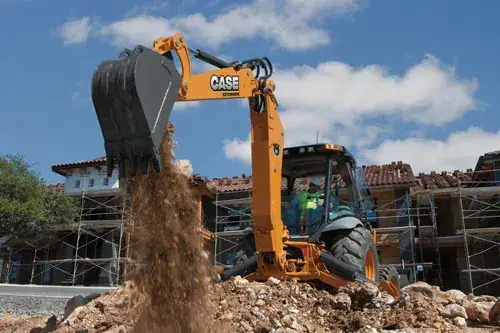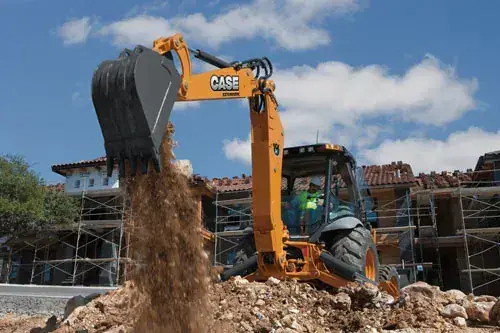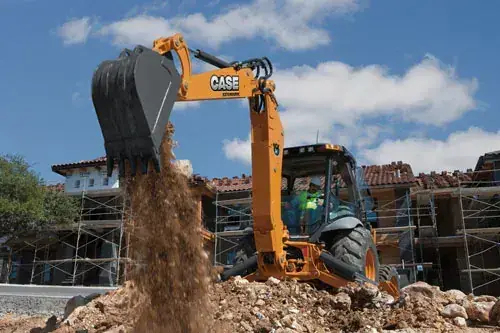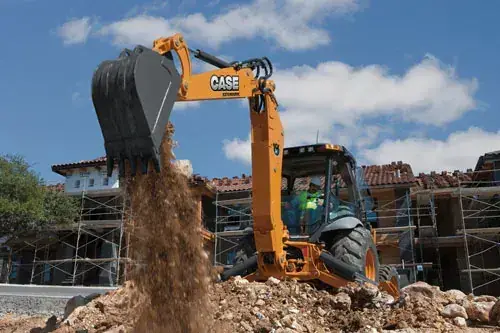
CASE WX95
Used CASE WX95 wheeled excavator — reference specifications, condition points and export notes for this model.
The CASE WX95 wheeled digging excavator has an operating weight of 10,000 kg and rated power of 99 hp (74 kW). A maximum dig depth of 4.3 m makes it suited to smaller trenching, utility repairs and general works where compact mobility matters.
Description is a class-level reference built from the published specifications above; the exact unit's year, hours and condition are confirmed before payment.
Reference specifications
| Operating weight | 10,000 kg |
|---|---|
| Rated power | 99 hp | 74 kW |
| Max dig depth | 4.3 m |
Buying brief: CASE WX95
The Case WX95 is a wheeled digging excavator in the 8-13 t class, with an operating weight of 10,000 kg, a bucket capacity typical of its size, and a rated power of 99 hp (74 kW). Machines of this class suit utility work, road maintenance, trenching and site preparation where the ability to travel between jobs on its own wheels matters. A maximum dig depth of 4.3 m covers many domestic and commercial excavation tasks. The combination of compact dimensions and wheeled mobility makes it a practical choice for contractors who need one machine to handle several roles across a spread of sites.
On site, the wheeled undercarriage gives this size of machine good travel speed and the ability to move between locations without a transporter. Buyers should weigh stability when working over the side, especially with heavy attachments, and check tyre condition and type for the ground conditions expected. Steering modes affect manoeuvrability in tight spaces, and the travel lock and oscillating axle features need to be understood before operation. Attachment compatibility, including quick couplers and auxiliary hydraulics, should be confirmed against the work planned.
Inspection before payment should cover the engine for smoke, oil leaks and starting behaviour, and the hydraulic system for smooth operation, unusual noise and cylinder condition. Check pins and bushes for play, particularly at the boom foot, stick and bucket linkage, as wear here affects precision and cost to repair. Wheel hubs and final drives need examination for leaks and noise, and brakes should be tested for effectiveness. Structural checks should include the boom, stick, frame and undercarriage for cracks or repairs, and the cab for security and function.
Shipping this size of wheeled excavator is normally decided by its dimensions and weight rather than by a single method. Units that fit within a standard container may travel that way after partial disassembly, while larger or taller configurations often move on a flat rack or by RoRo where the destination port handles wheeled cargo. Breakbulk is used when dimensions or routing rule out other options. The destination port's facilities, the shipping line's requirements and the unit's actual measurements determine the final loading method.
Common questions
Is a used CASE WX95 available right now?
What does a used CASE WX95 cost?
How is a CASE WX95 shipped from China?
Related reading
How do you inspect a used wheeled excavator?
What does a used wheeled excavator cost?
How are used wheeled excavators shipped from China?
Who confirms the condition of the machine before the balance payment?
Who exports used wheeled excavators to Oceania?
What does a used condition grade mean?
What documents are needed to import a used excavator?
How do you choose the right port of discharge?