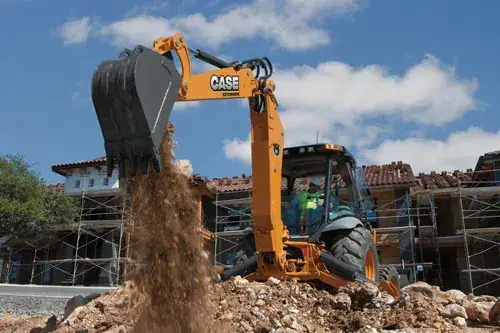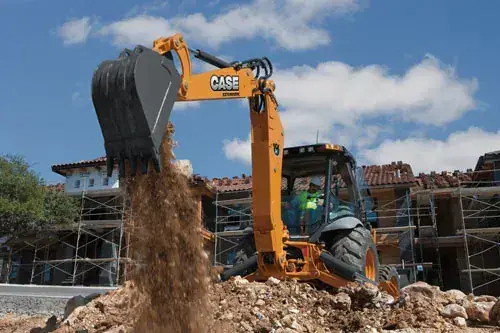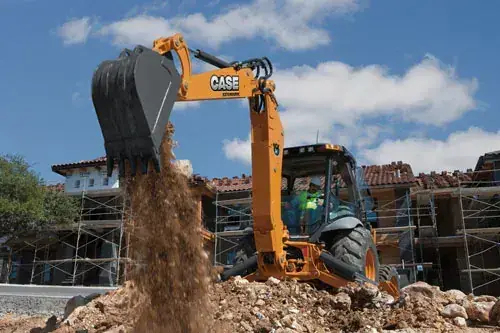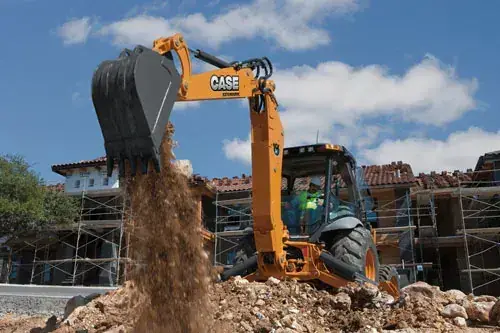
CASE WX240
Used CASE WX240 wheeled excavator — reference specifications, condition points and export notes for this model.
The CASE WX240 is a wheeled digging excavator with an operating weight of 22,700 kg and rated power of 117 hp (87 kW). Its maximum dig depth of 6.2 m is intended for deep excavation and heavy construction tasks on firm surfaces.
Description is a class-level reference built from the published specifications above; the exact unit's year, hours and condition are confirmed before payment.
Reference specifications
| Operating weight | 22,700 kg |
|---|---|
| Rated power | 117 hp | 87 kW |
| Max dig depth | 6.2 m |
Buying brief: CASE WX240
The Case WX240 is a wheeled digging excavator in the 20 tonne and over class, with an operating weight of 22,700 kg. Its rated power is 117 hp (87 kW), and it has a maximum dig depth of 6.2 m. This machine is intended for excavation, trenching, and material handling on construction and utility projects. The wheeled design allows travel between job sites on public roads, which can be useful for contractors working on scattered locations. The operating weight and dig depth make it suitable for medium-scale earthworks, foundations, and drainage. Buyers should note that the power rating is lower than some other machines in this weight class, so the intended application should be matched to the hydraulic and digging requirements. In use, the wheeled undercarriage provides mobility but requires attention to stability, especially on uneven ground.
The buyer should consider the tyre type and condition, as these affect traction and flotation. Steering modes, such as all-wheel steer, can improve maneuverability in tight spaces, but the operator must understand the travel lock and axle oscillation controls. The machine's weight and power influence its performance with attachments like buckets, breakers, or grapples. Stability can be reduced when working over the side, so check the load charts. Tyre pressure and wear should be monitored regularly, and the braking system must be adequate for road travel. Inspection should cover the engine for oil leaks, exhaust smoke, and starting behavior. The hydraulic system needs checking for leaks, unusual noises, and correct operation of all functions.
Pins and bushes in the boom, arm, and bucket should be checked for excessive play. Wheel hubs and final drives should be examined for leaks and noise. Brakes, including the parking brake, should be tested. Structural checks should focus on the main frame, boom, and axle mounts for cracks or repairs. Also inspect the tyres for cuts and wear, and verify that the steering and travel lock systems function correctly. Shipping arrangements for this wheeled excavator depend on its dimensions and the destination port. With an operating weight of 22,700 kg, the machine may be shipped by container, flat rack, RoRo, or breakbulk.
The overall height and width determine whether a flat rack or breakbulk is required. For container shipment, disassembly may be necessary, but the wheeled undercarriage can ease loading. RoRo is an option when the machine can be driven onto the vessel. The choice of method is influenced by the shipping line's rules, port facilities, and the total dimensions after preparation for transport.
Common questions
Is a used CASE WX240 available right now?
What does a used CASE WX240 cost?
How is a CASE WX240 shipped from China?
Related reading
How do you inspect a used wheeled excavator?
What does a used wheeled excavator cost?
How are used wheeled excavators shipped from China?
Who exports used wheeled excavators to Russia and Central Asia?
What is FOB and CIF when buying used machinery?
What is the China IV emission standard for non-road machinery?
How is shipping cost calculated for an excavator?
How do you operate a wheeled excavator on a slope?