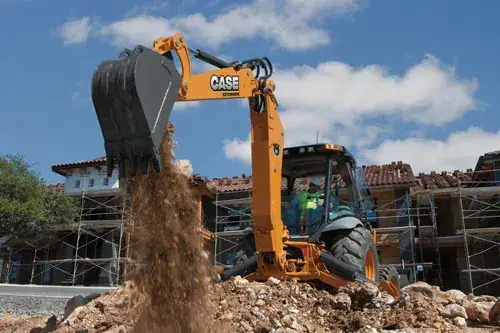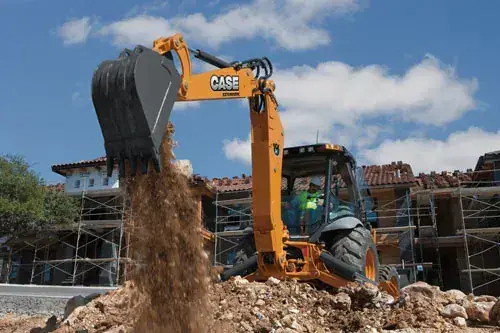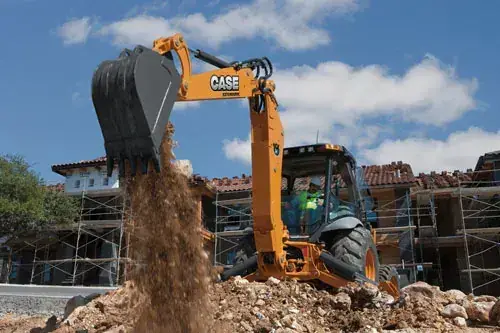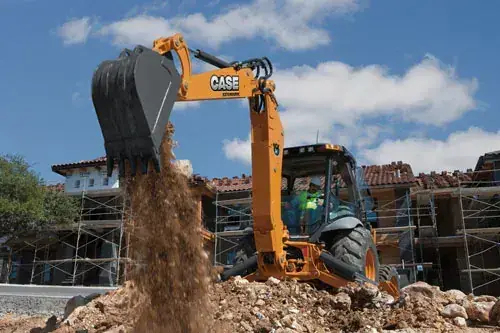
CASE WX165
Used CASE WX165 wheeled excavator — reference specifications, condition points and export notes for this model.
The CASE WX165 wheeled digging excavator has an operating weight of 18,500 kg and rated power of 141 hp (105 kW). With a maximum dig depth of 5.9 m, it fits heavier trenching, foundation work and general earthmoving on paved or firm ground.
Description is a class-level reference built from the published specifications above; the exact unit's year, hours and condition are confirmed before payment.
Reference specifications
| Operating weight | 18,500 kg |
|---|---|
| Rated power | 141 hp | 105 kW |
| Max dig depth | 5.9 m |
Buying brief: CASE WX165
This is a 13 to 20 tonne class wheeled digging excavator, with an operating weight of 18,500 kg. It is powered by a 141 hp (105 kW) engine and can reach a maximum dig depth of 5.9 m. Machines in this class suit utility trenching, road works, drainage, and general construction where the excavator needs to move between sites. The weight and power give a balance of digging performance and mobility for larger projects. The size provides good reach for deeper tasks while remaining roadable. The wheeled undercarriage allows travel on paved surfaces without a transporter, which can reduce mobilization time on projects with multiple small work areas.
The buyer should weigh ground conditions and tyre choice for this size. Stability can be affected by the oscillating axle and tyre pressure, so check the travel lock and steering modes. The 18,500 kg weight and 105 kW power are suited to a range of attachments, but the buyer should weigh the hydraulic requirements and the machine's lifting capacity at reach. Tyres wear differently from tracks, and replacement costs should be factored in. The turning circle and travel speed are advantages on road projects, but flotation on soft ground is limited compared with tracked machines. Before paying, inspect the engine for leaks, smoke, and unusual noise, and check the hydraulic system for responsiveness and contamination.
Pins and bushes in the boom, arm, and bucket linkage should be examined for play and wear. Wheel hubs and final drives need a check for oil leaks and bearing noise. Brakes, including the parking brake, should be tested on a slope if possible. Structural cracks around the kingpost, axle mounts, and boom foot are important to find. Also review the condition of the tyres and the steering mechanism, as repairs on these components can be significant. Shipping this size of wheeled excavator is typically done by container, flat rack, RoRo, or breakbulk, depending on the unit's dimensions and the destination port.
The operating weight of 18,500 kg and the overall height and width determine whether a flat rack or breakbulk is needed. For container shipment, the machine may need to be partially disassembled, but the wheeled undercarriage can simplify loading compared with tracked machines. RoRo is often used when the machine can be driven on and off the vessel. The final choice depends on the port's facilities, the shipping line's requirements, and the total dimensions after any preparation.
Common questions
Is a used CASE WX165 available right now?
What does a used CASE WX165 cost?
How is a CASE WX165 shipped from China?
Related reading
How do you inspect a used wheeled excavator?
What does a used wheeled excavator cost?
How are used wheeled excavators shipped from China?
Who exports used wheeled excavators to Southeast Asia?
Who supplies compact wheeled excavators under 8 tonnes?
What does a dozer blade do on a wheeled excavator?
How do you check the hydraulics on a used wheeled excavator?
How do you clear customs for a used excavator?